QSR signage rollouts are unforgiving. A quick-service restaurant brand that opens forty stores a year across twelve cities is testing every weakness in its signage operation simultaneously. The brand director who gets this right is the one who has accepted that brand coherence at multi-city scale is a manufacturing problem, not a creative problem.
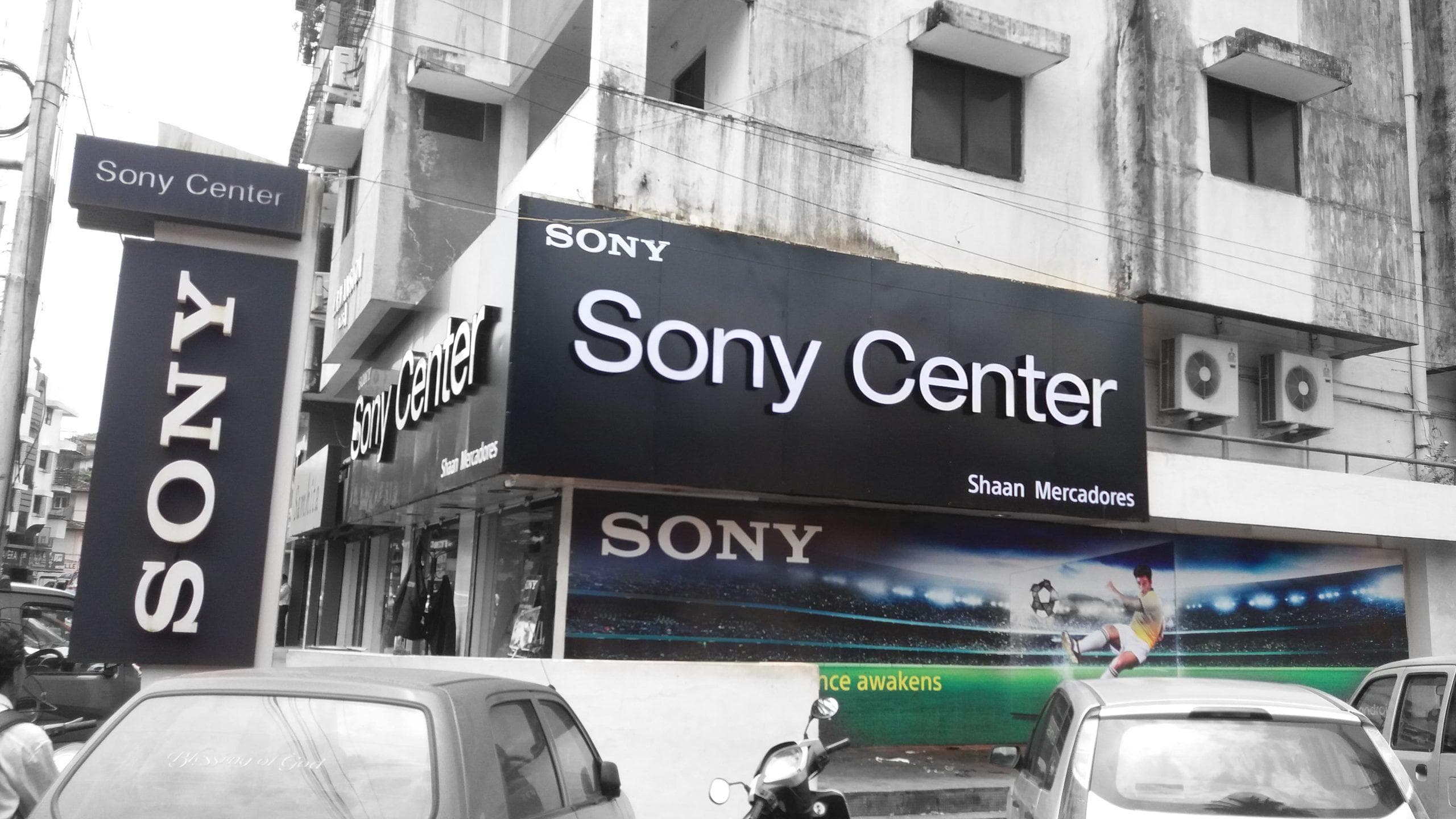
The failure mode is familiar. The flagship store in a metro looks correct — the colours are bang-on, the LED illumination is uniform, the lettering is crisp, the photographs go in the brand presentation. The store opening in a tier-three city six months later has a fascia that's slightly off-shade, an LED that's noticeably warmer in colour temperature, a wordmark whose letter-spacing is just a little wider, and a finish that looks tired by month four. Both stores carry the same brand name. The brand presentation only shows the flagship.
The root cause is almost always vendor fragmentation combined with absent specification discipline. The brand has appointed a different fabricator in each region — sometimes a different fabricator for each city — chosen on local price and convenience. Each fabricator interprets the brand book differently, sources materials from different suppliers, uses different LED brands and drivers, and applies different finishing standards. The result is a portfolio that is on-brand only in the marketing director's intentions.
The operational solution is to build the signage like a manufactured product, not a series of bespoke installs. Start with a master fabrication specification — a document that defines, at the level of every component, exactly what is to be made. Substrate brand and grade, substrate gauge to two decimal places, paint or finish system with manufacturer reference and Pantone, lettering construction method, LED module brand and colour temperature, driver specification, mounting hardware specification, electrical safety standard, and finishing protocol. This document is twenty to forty pages. It is the bill of materials for the brand's storefront.
The specification has to be tight enough that two qualified fabricators reading it would produce visually identical outcomes. This is the test. If the spec leaves room for interpretation on materials or methods, you will get variation. Tighten it until interpretation is impossible. The fabricators who can deliver to this spec are not the cheapest in any local market; they are the ones who have invested in the equipment and quality systems to hit precise specifications consistently. Choose two or three of them across the territory, not twelve.
The colour question deserves its own paragraph. QSR brands live and die on colour. The brand red on a fascia in Bengaluru has to be the same brand red on a fascia in Lucknow, in conditions of bright tropical sunlight and warm ambient evening light. This requires a colour management discipline that most fabricators don't naturally apply. Specify the colour by Pantone for printed elements, by RAL for coated metal elements, by manufacturer reference for backlit acrylic, and by colour temperature plus CRI for LED illumination. Test the colour at the fabrication shop with a spectrophotometer against a reference panel, and require the fabricator to maintain that reference panel as a calibration source. Repeat the test at the installation site, ideally at night under the actual operating illumination.
The LED choice is the one that ages most visibly. A correctly chosen LED module — a known brand with a stable colour temperature, a driver matched to the load, a thermal management design that prevents premature ageing — will hold its colour and intensity for five to seven years. A cheaper LED module with no colour binning, an underspecified driver, and poor thermal management will visibly fade and shift colour within eighteen to twenty-four months. The cost difference between the two at fabrication is roughly thirty percent. The cost of a forty-store brand showing visibly faded illumination at three years is the brand equity itself.
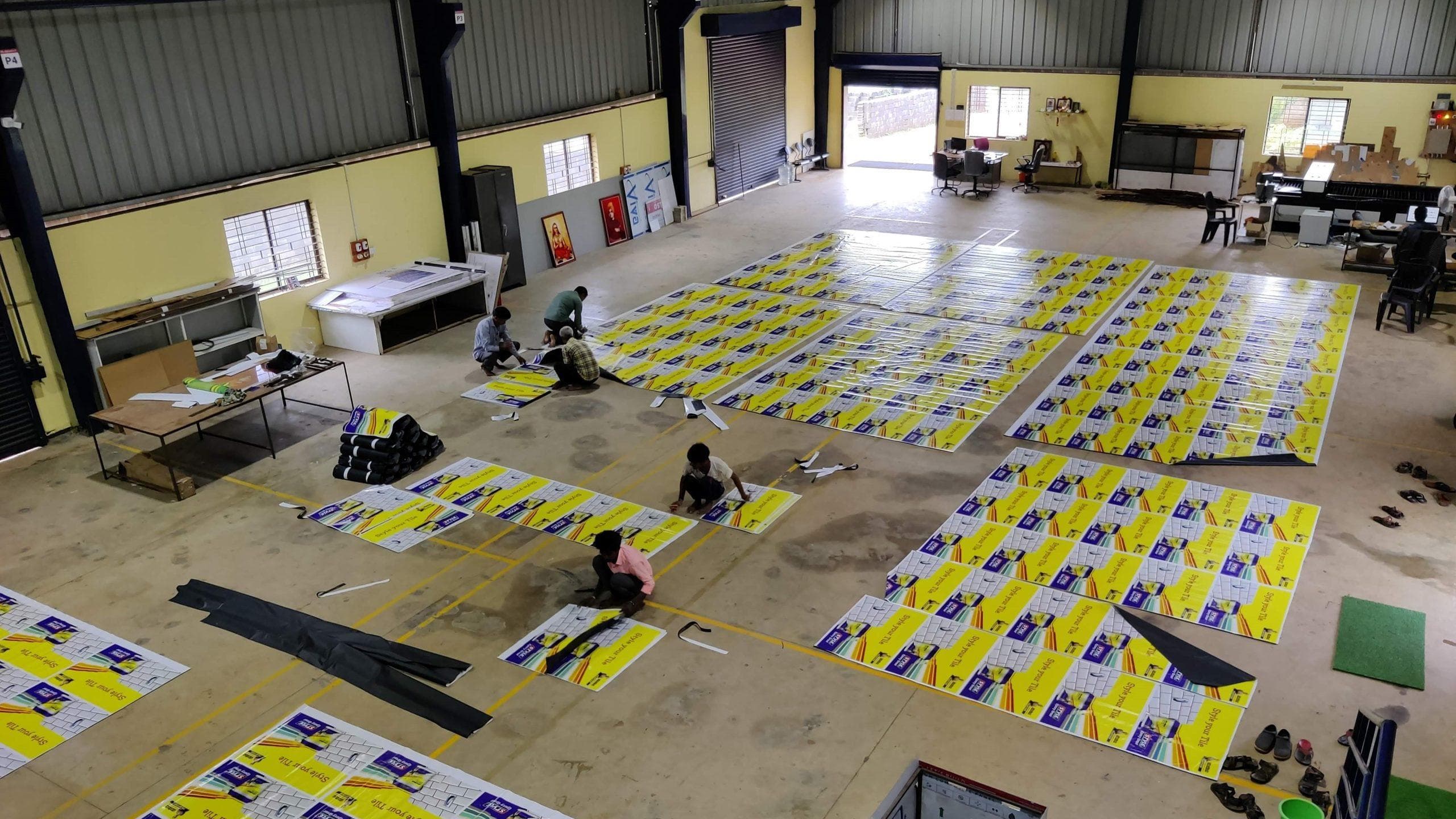
The rollout cadence has to be planned at the network level, not the store level. A brand opening four stores per quarter across multiple cities should be batching fabrication runs to maintain consistency. Run a fabrication batch of twelve fascia panels at once for the next quarter's openings, from a single roll of substrate, with a single mixing of paint, fabricated by a single shop team in a single week. The visual consistency across that batch will be perfect. The cost per unit will be lower because of batching efficiency. The fabrication shop schedule will be predictable. This requires the brand to commit to a six-month rolling forecast of openings — which the development team usually has but doesn't share with the signage team.
The site survey discipline matters more in QSR than in most retail formats because QSR sites are non-standard. The brand opens in mall food courts, on high streets, in transit hubs, in office complexes, in highway service areas. Each format has different mounting conditions, electrical availability, and visibility constraints. The site survey should be done by the signage vendor before the lease is signed if possible, or at least before the fit-out begins. The output is a per-site signage plan that fits the kit-of-parts to the actual conditions. Brands that skip this and discover problems on installation day waste days per site at scale.
The installation crew quality is the variable that the brand controls least directly but matters most. Two fabricators with identical specifications can produce identical fascia panels, but the installation crew determines whether the panel is mounted level, the gaps are even, the cabling is concealed, the seal is weather-tight, and the finishing is clean. Specify the installation crew qualifications, require lead-installer certification, and require a per-site installation completion checklist with photographic evidence. Pay the fabricator on completion of the checklist, not on delivery to site. The fabricators who push back on this are the ones who don't trust their own crews.
The AMC at multi-city scale is operationally complex and strategically essential. A forty-store network has roughly 600 to 1,000 individual signage components in service. Annual failure and replacement rate is typically eight to fifteen percent. Without a structured AMC, this means thirty to seventy unscheduled service calls per year, each requiring a fabricator to mobilise to a non-local site. The cost is real and the brand exposure when a flagship store has a dark fascia is reputational. A combined-vendor AMC with regional service partners, held inventory of spare modules at city level, defined SLAs (typically twenty-four hours for non-critical, four hours for critical-visibility sites), and proactive monitoring of LED ageing is correct for this scale. The /amc page of a fabricator serving multi-city QSR brands should describe this structure honestly.
The brand audit is the discipline that holds the system together. Twice a year, the brand should physically audit a sample of stores — typically twenty to thirty percent — against the master specification. The audit checks colour, illumination, finish condition, alignment, and signage compliance with the latest brand standards. The audit findings drive the AMC priorities and the next-cycle specification updates. Brands that don't audit drift visibly within two years of network expansion. Brands that audit consistently maintain coherence across hundreds of stores.
The practical takeaway for a QSR brand director planning a multi-city rollout: write the master fabrication specification properly, choose two or three fabrication partners with proven multi-city capability rather than a dozen local vendors, batch fabrication runs to a rolling forecast, document installation completion with photographic evidence, structure a real AMC from day one, and audit the network twice a year. The /works portfolios of fabricators with multi-city QSR experience are worth a careful look — the consistency in those photographs is not luck, it is the visible result of the operational discipline described here.