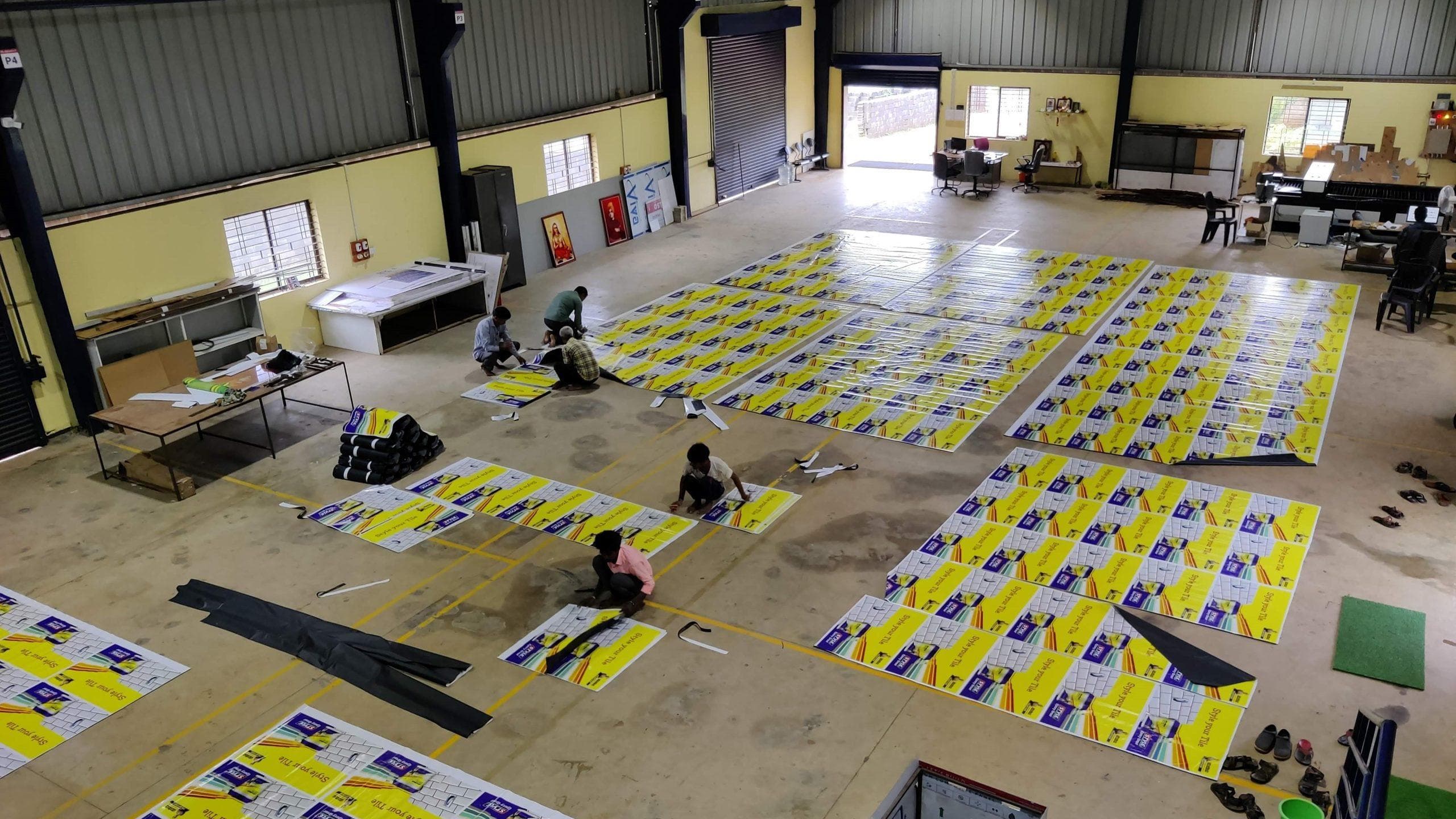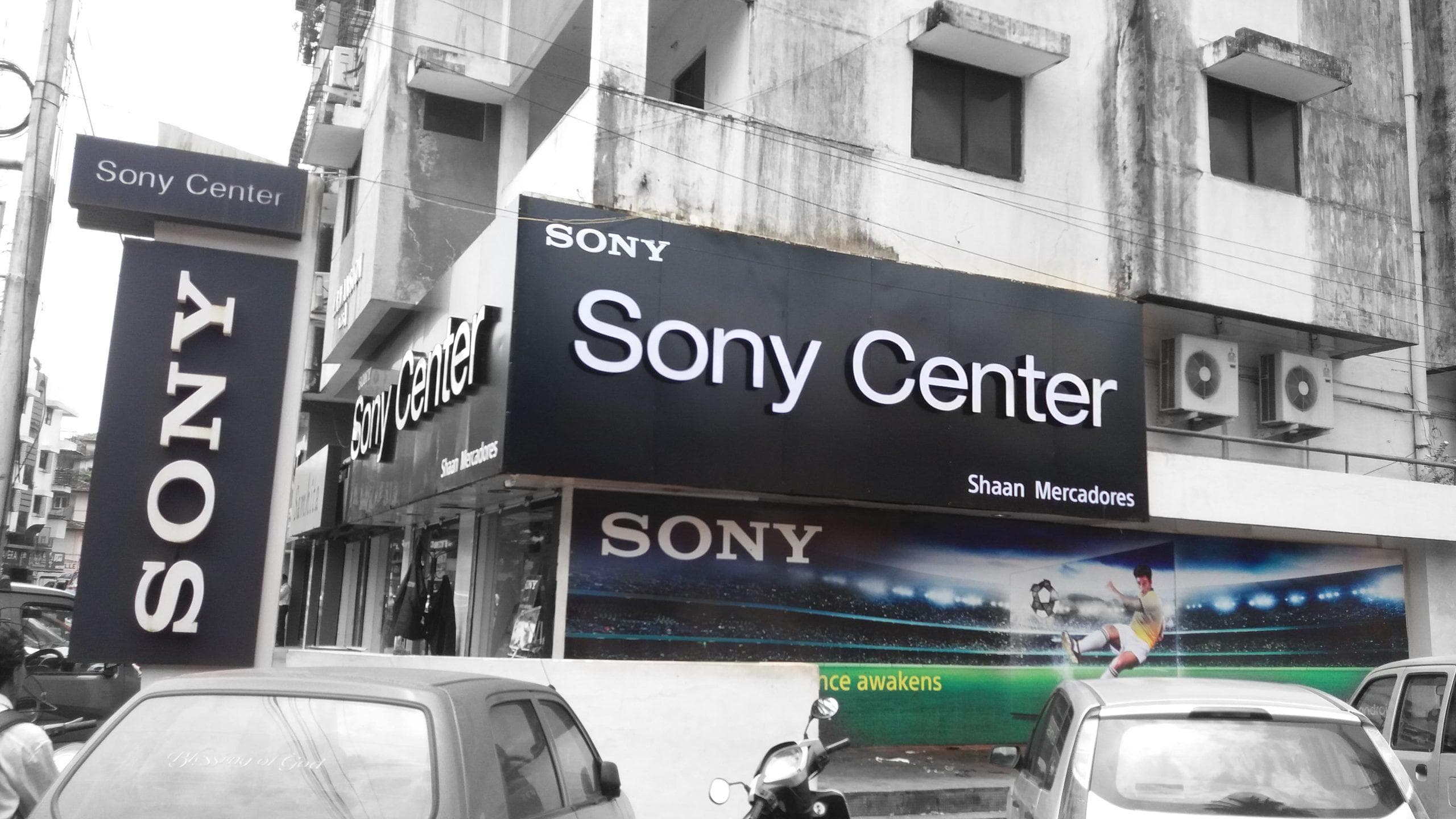
Storefront rollouts go wrong in the brief, not the install. By the time the fabricator is on site, the decisions that matter have already been made — which means the brief you write in week one is the single biggest lever you have on cost, timeline, and finish quality. Most retail brands get this wrong because the brief is treated as a procurement form to be filled, not a thinking document to be written.
A real rollout brief does five things. It defines the asset clearly enough that two vendors quoting on it will price the same job. It captures the constraints — site, regulatory, brand — that aren't visible from a drawing. It sets the rollout cadence in a way the vendor can plan against. It establishes what 'done' looks like at each site. And it puts a name and a phone number against every decision that will need to be made between PO and final handover.
Start with the asset definition. A storefront for a sixty-store rollout is not one drawing; it's a kit of parts. Fascia ACP panel with cut-out illuminated lettering, secondary identity sign, window vinyl with adhesive specification, internal wayfinding pieces, queue-management signage, regulatory plates, and the back-of-house store-name plate. For each piece, you need dimensions in millimetres, material with grade and gauge, finish (matte, gloss, satin, brushed), illumination type if any, mounting method, and a tolerance. Tolerance is the one most brands forget. A two-millimetre seam between ACP panels is a different job from a five-millimetre seam, and pricing it correctly requires the vendor to know which you'll accept.
Next, the site context. No two retail sites are identical even within the same chain. The brief should include — for every site or every site cluster — the frontage type (glass, brick, ACP-clad, structural concrete), the fascia depth available, the mounting surface, the power availability and load, the access constraint (mall hours, residential complex restrictions, gated industrial estate), and the catchment context (mall first floor, high street ground floor, highway service road). A vendor pricing a thirty-store deal blind will pad twenty percent for unknowns. A vendor pricing the same deal with site context can price tighter and you'll save real money.
Brand standards are the third leg. Most retail brands have a brand book. Most brand books were written by the agency that did the original brand identity, who has not visited a single store. The brief should extract from the brand book the parts that matter for fabrication — exact Pantone or RAL references for every coloured surface, the typography file, the minimum legibility size for the wordmark, the relationship of any sub-brand or franchise marker to the main fascia, and a statement on whether deviations are allowed for site-specific constraints. If your brand book says no deviations, your installation team will spend half its time on phone approvals. Build the deviation policy into the brief.
Regulatory constraints come fourth. Outdoor signage in Indian cities is governed by a patchwork of municipal rules, mall sign codes, residential association rules, and increasingly, fire and electrical safety norms for illuminated signage. The brief should state for each city or cluster what permissions are required, who is responsible for obtaining them, what the typical lead time is, and what the fallback is if approval is delayed. The brands that do this well treat regulatory as a parallel workstream that starts before fabrication, not a serial step that holds up installation.
The rollout cadence is where most briefs go vague. 'Sixty stores in twelve months' is not a cadence. A cadence is a sequenced schedule that says which stores in which order, with which dependency on real estate handover, fit-out completion, and electrical readiness. The fabricator needs this because they're planning material purchases, fabrication shop loading, and site team movements weeks in advance. A brief that gives the fabricator visibility into the next ninety days of installs gets pricing built around batching efficiencies. A brief that drops 'install three this week' on a Wednesday gets premium-priced ad-hoc fabrication.
Defining 'done' is the fifth piece. A site is not done when the sign is mounted. A site is done when the sign has been switched on at night and photographed, the warranty document has been issued site-specific, the spare modules have been left with the store manager, the installation snag list has been cleared, and the property management has signed off on the access closure. Build a per-site sign-off sheet into the brief and make it part of the vendor's payment milestone. The vendors who push back on this are the ones you don't want.
The final element of a good brief is the contact map. For every decision that will need to be made between PO and final site handover — colour deviation, mounting variation, electrical reroute, permission delay, snag list arbitration — there should be one person from your side with the authority and the bandwidth to respond within twenty-four hours. The fabricator should know who they are by role and have their direct phone number, not a shared inbox. Rollouts stall when fabricators send approval requests into the void and wait three days for a response. The single biggest accelerator on a sixty-store rollout is a named decision-maker who picks up.
Budget transparency goes both ways. Tell the vendor your overall budget envelope and your cost-per-store target. Vendors who know your budget can value-engineer in your favour — substituting a slightly different LED module that gives you the same look at a meaningful saving, or batching shipments to reduce per-site logistics. Vendors who don't know your budget price defensively and you end up paying for their uncertainty.
A few things to leave out of the brief. Do not specify the brand of LED, the brand of vinyl, or the brand of acrylic unless you have a tested reason. Specify the performance — colour temperature, lumens per metre, fade resistance in months — and let the fabricator propose materials they have a relationship with. You will get better pricing and the fabricator owns the warranty without finger-pointing.
A good rollout brief is twelve to twenty pages. It includes drawings, a materials specification sheet, a site list with context, a permissions matrix, a rollout calendar, a sign-off template, and a contact map. It takes two to three weeks to write properly, which feels slow when you're trying to launch. The trade-off is real and the math is unforgiving. Three weeks spent on the brief saves four to six weeks across the rollout. The brands that build this discipline into their second rollout are the ones that scale to two hundred stores without burning through three vendors. You can see the pattern in the /works gallery of any fabricator who's done large multi-city deals — the projects that look effortless were briefed brutally well.