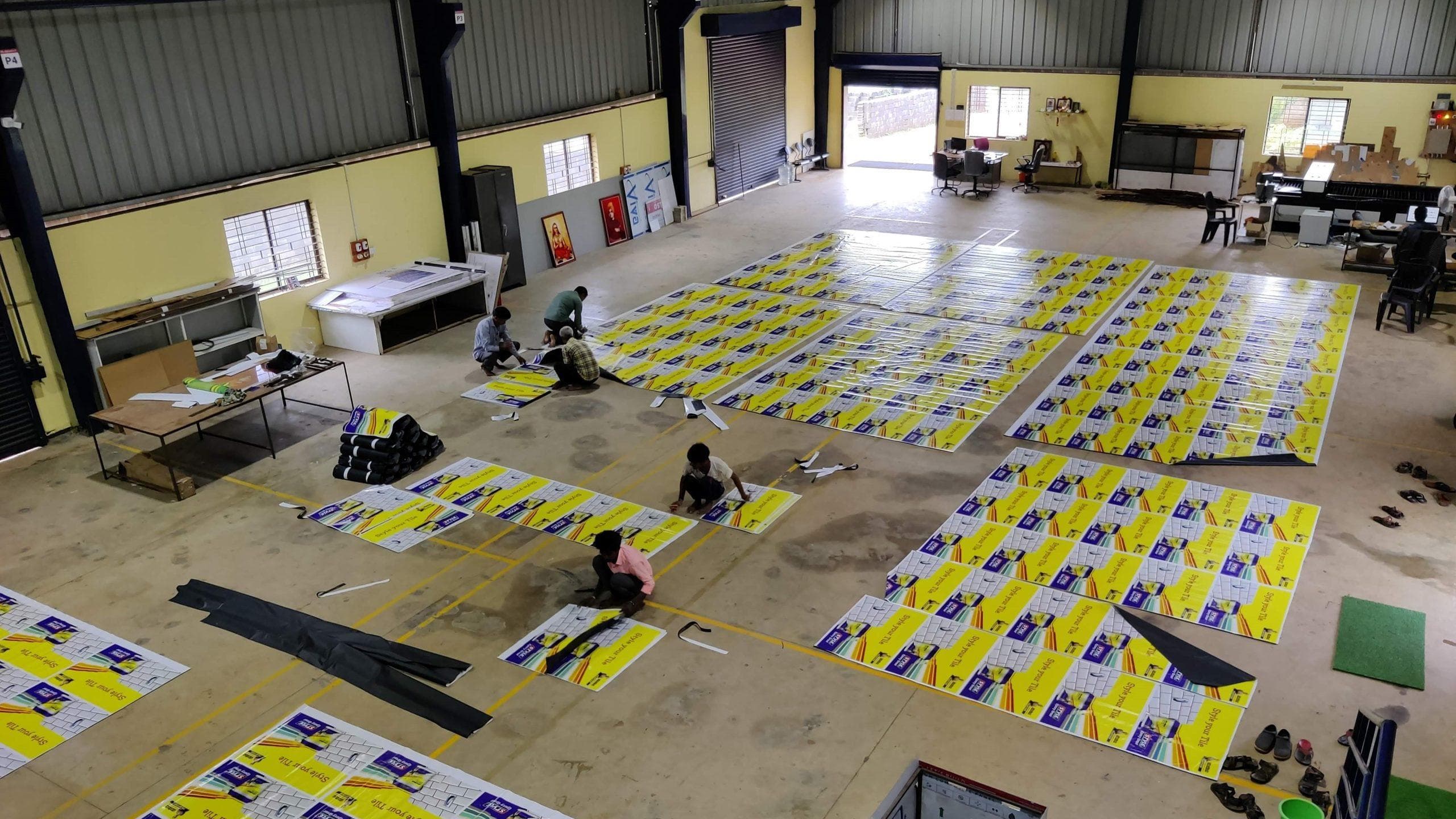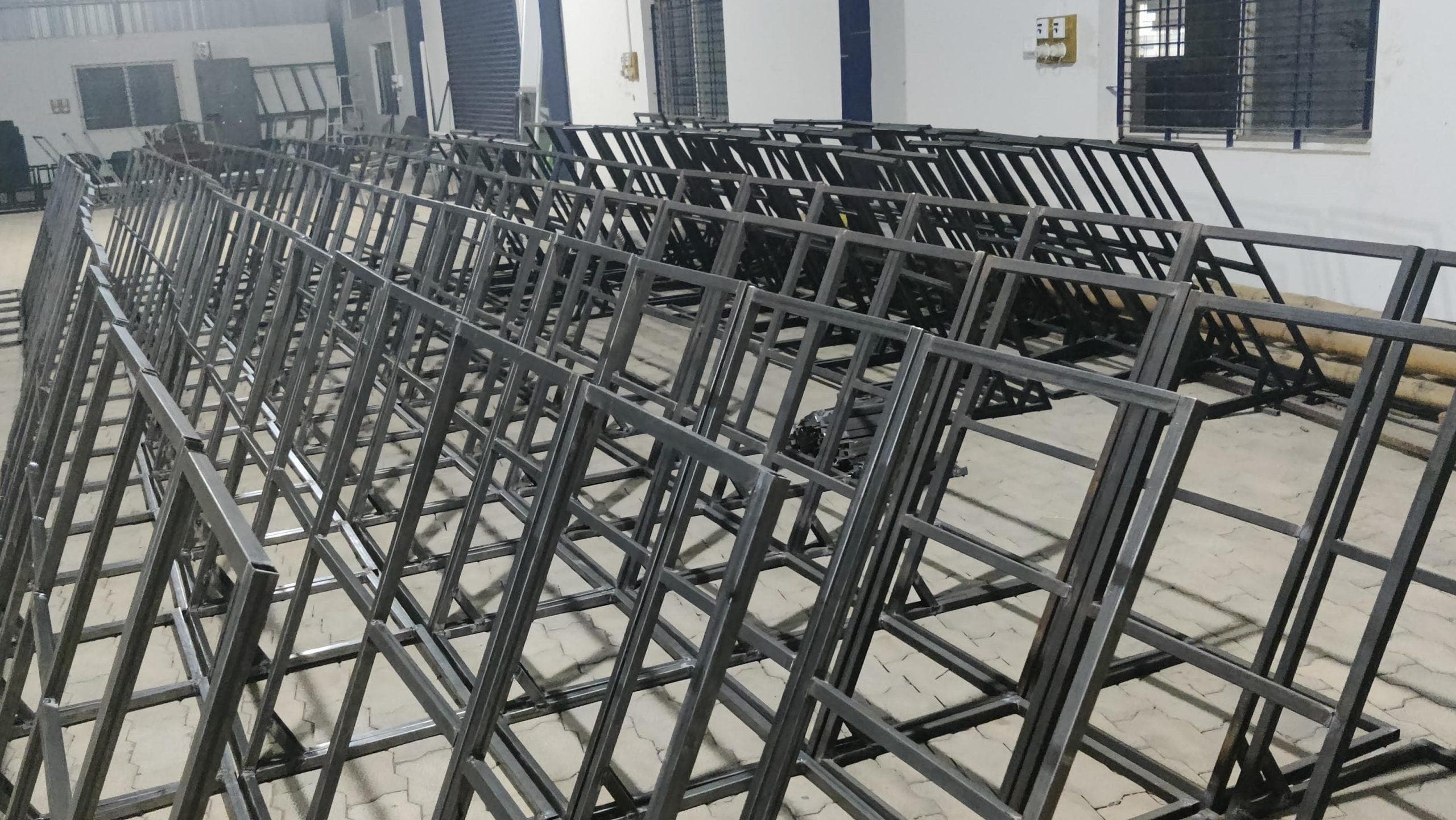
There is a moment, usually around week three of a multi-state signage rollout, when the project manager on the client side realises that the lump-sum number they accepted in the PO is no longer the number anyone is talking about. Variations have crept in. Site B needed a structural plinth that wasn't in scope. Site D's facade was concrete instead of ACP cladding. Site G's landlord asked for a change in fixing method. Suddenly there are seven change orders, four reconciliation calls, and a finance team that wants to know why a ten-lakh PO is now quoting at thirteen.
This is the central tension between BOQ-based quoting and lump-sum quoting on multi-state signage work, and it deserves a serious procurement conversation rather than the usual reflex toward whichever number looks cleaner on a spreadsheet.
A lump-sum quote feels safer. One number, one PO, one reconciliation. Procurement teams love it because it makes budget defence easier upstairs. The vendor, in theory, absorbs site-level variability. In practice, what actually happens is one of two things. Either the vendor pads the lump-sum number heavily to cover the unknowns, in which case the client overpays on every single site that was straightforward. Or the vendor quotes tight and then converts every site-level surprise into a scope variation, which leads to the reconciliation drama described above.
A BOQ-based quote is operationally honest. Every line item is unit-rated. Aluminium composite panel per square metre, CNC routing per running foot, LED module per linear metre, mounting hardware per fixing point, transport per kilometre, scaffolding per day, electrician per visit. The total fluctuates with actual site conditions, but the rates are locked. When site B needs an extra structural plinth, you don't argue about whether it's in scope, you just measure the plinth and apply the locked rate. Procurement audits become tractable. Finance can reconcile each site against actual measured quantities.
The operational reality on a 40-site rollout across nine states is that you will encounter every possible site condition. Some buildings will have ready-to-fix surfaces, others will need surface preparation, a few will require structural intervention. Anchor types vary depending on whether you're going into RCC, brickwork, or steel sheeting. Permit regimes vary by municipality. Landlord conditions vary by site. None of this is anyone's fault, it's just what multi-state work looks like at scale.
The BOQ approach prices honesty into the contract from day one. The lump-sum approach defers honesty to the change-order conversation, which is always a worse conversation to have because it's adversarial by then.
What a defensible BOQ for a multi-state signage rollout actually looks like: section one covers fabrication, broken into substrate, face, illumination, and fixings. Section two covers transport, separated by site cluster and mode. Section three covers installation, broken into mobilisation, scaffolding or man-lift hire, electrical termination, and demobilisation. Section four covers permits and statutory clearances where applicable. Section five covers warranty, AMC carry-over, and the snag-list closure mechanism. Each section is unit-rated. The PO references the rate card and the site list. Each site closes against an as-built measurement sheet signed by both the site supervisor and the client representative.
This discipline is the difference between a project that closes cleanly in twelve weeks and one that drags into month six because nobody can agree on what was delivered.
There are situations where lump-sum is the right tool. Single-site work with a fully detailed scope, repeat work where conditions are known and standardised, or pilot installations where the client wants a fixed-cost test before committing to a wider rollout. For these cases, lump-sum is faster to award, faster to audit, and creates less administrative overhead. The vendor can quote tight because the variability is bounded.
But for multi-state, multi-site, multi-condition rollouts, BOQ wins on every dimension that actually matters six months in.
There is also a vendor-quality signal embedded in the quoting style. A vendor who can produce a clean, line-itemised BOQ with rate cards, anchor schedules, transport lanes, and warranty mechanics has done this kind of work before. A vendor who can only produce a lump-sum number is either inexperienced at scale or is hoping the variations will land in their favour. Procurement teams should treat the quoting format itself as a vendor-due-diligence signal.
The other procurement reality is that BOQs survive vendor changes. If your initial vendor underperforms or runs into trouble mid-project, a BOQ-rated scope can be handed to a replacement vendor with minimal renegotiation. A lump-sum scope cannot. The replacement vendor has to re-price the entire remainder. This is one of the most underrated procurement risks in our category and it ties directly into the vendor-insolvency conversation that procurement heads should be having more often.
For multi-state signage work, the procurement team should ask the vendor for a BOQ-rated quote even if the eventual PO is structured as a not-to-exceed lump-sum with measured-quantity reconciliation. The exercise of producing the BOQ surfaces the assumptions, exposes the rate logic, and makes the eventual change-order conversation civilised rather than combative. The lump-sum convenience can sit on top of the BOQ honesty. The two are not mutually exclusive.
The project that closes well is the project that priced the variability honestly at the start. Everything else is a finance reconciliation waiting to happen. If you want to see how we structure these BOQs in practice, our /services pages walk through scope, and the /downloads page has rate-card templates we use on enterprise rollouts. The /contact form routes multi-state RFQs to the operations desk for a structured response within 48 hours.